viernes, 27 de octubre de 2023

UNIT 4 - LESSON 2 - DESCRIBE A CAR PROBLEM


   VOCABULARY 


Complete the sentences with the two parts of each phrasal verb.

1.The car’s almost out of gas. Let’s go in here so I can FILL it UP.

2.It’s raining, and I can’t TURN the windshield wipers ON . They aren’t working.

Can I use your car this afternoon? I can PICK it UP at 3:30 if you don’t need it then.

4.We have to return the rental car before 6:00. Let’s  DROP it OFF early at the airport and get something to eat, OK?

5I can’t TURN the air conditioning OFF . It’s freezing in here!

PHRSAL VERBS

What are phrasal verbs?

Phrasal verbs are verbal structures composed of two particles: verb +adjective + adverb orpreposition that serve to define specific actions or states. Thanks to this, from the same verb, for example, burn, very different phrasal verbs can be created: burn out (to become extinct), burn down (to burn completely, to ashes) or burn up (to cause anger, to handle high speed). Furthermore, thanks to its widespread use among native English speakers, it is a topic that is essential for students of the language to master.  

Types of phrasal verbs

Part of the difficulty in learning the use of phrasal verbs comes from the fact that there are three types:

  1. Phrasal intransitive verbs

The action does not fall on a direct object because it only affects the subject of the sentence. For example.

  • My smartphone broke down this week.

  1. Phrasal inseparable transitive verbs

As a transitive verb, the action falls on the direct object. They are called inseparable because the sum verb + adjective, adverb or preposition must always appear without alterations of any kind. For example:

  • I will look after my grandmother tonight. 

  1. Separable transitive phrasal verbs

Again, since they are transitive, the action falls on the direct object. However, they are called separable because said direct object can be placed between the verb and the adjective, adverb or preposition. For example:

  • You never let me down.


    SENTENCES 

    1. * She broke down when she heard the sad news about her friend.
    2. * The team needs to work on their project to meet the deadline.
    3. * I can't believe he came across my old yearbook in the attic.
    4. * They are planning to carry out a detailed study of the ecosystem.
    5. * Please back up your important files to avoid losing data.
    6. * The cat tried to climb up the tree to catch the bird.
    7. * We'll have to hold off on the meeting until the boss arrives.
    8. * I need to check in at the hotel before we head to the conference.
    9. * Don't forget to turn off the lights when you leave the room.
    10. * We'll figure out a solution to this problem together.
Dialogue describing a car problem.

Driver: (frustrated) Oh no, the car is making a strange noise!

Passenger: (concerned) What kind of noise is it? Can you describe it?

Driver: (wincing) It's like a loud, metallic grinding sound coming from under the hood.

Passenger: (worried) That doesn't sound good. Did a warning light come on?

Driver: (nervous) No, no warning lights, but I can feel some vibrations in the steering wheel.

Passenger: (thoughtful) It might be an issue with the brakes or the wheel assembly. We should pull over and check it out.

Driver: (agreeing) Yeah, you're right. Let's find a safe spot to stop and take a look. This doesn't sound like something we should ignore.


UNIT 4 - CARS AND DRIVING - PAST CONTINUE - LESSON 1


 Habits of Bad Drivers


Have you ever seen an accident? If you, go to the question 2 if not, go to question 4.

Yes, I have

Where was it?

In the Circunvalar avenue

What was the cause of the accident?

 The driver of the car was talking on his cell phone. He didn't see the red light and crashed into another car.

LESSON 1 - DISCUSS A CAR ACCIDENT


VOCABULARY

  • Steering Wheel – volante  
    • Don’t grab the steering wheel while I’m driving! That’s very dangerous.
  • Claxon (UK) / Horn (US) – bocina 
    • I really don’t like when people use their claxon for everything. Sometimes it is not necessary. 
  • Storage compartment (UK) / Glove compartment (US) – guantera
    • I usually leave my wallet in the glove compartment when I go hiking because I don’t think I’ll need it. 
  • Door handle – manilla
    • Careful with the door handle. I think one of the screws are loose and it may come off. 
  • Stick shift – palanca de cambios 
  • Gas pedal – acelerador   
    • There’s an expression that goes ‘put the pedal to the medal’. It means that you should step on the gas pedal so hard that it hits the metal of the car and you go as fast as you can. 
  • Brake pedal – pedal de freno 
    • In the beginning I found it difficult to use my right foot for the brake pedal since I was always used to using my left. 
  • Clutch – embrague
    •  I found that the hardest part about learning to drive was using the clutch to start the car. 
  • Air bag – airbag 
    • Most cars today have air bags for both the driver and the passenger as well as for the back seat passengers. 
  • Vent – conducto
    • We had the air conditioning on high but nothing was coming out. It was because we had the vents closed!
  • Indicator (UK) / Turn signal (US) – indicador 
    • In the US we always put our turn signalon before looking to see if I can get over, but in Spain you need to make sure you can get over and then put your turn signal on. This can causes a lot of confusion and angry drivers.


PAST CONTINUOUS


The past continuous is used for actions that were happening at a specific time in the pastLike the present continuous, it is formed with the auxiliary verb “ to be ” and the verb+ing.

Grammatical Rules (Gramatical rules)

Form _

To form the past continuous, the auxiliary verb “to be” and the verb+ing are used. The auxiliary verb “ to be ” is in the past simple, but keep in mind that “ to be ” is an irregular verb.

SUBJECTAUXILIARY (TO BE)


Sentences past continue

  1. * While I was cooking dinner, the phone rang.
  2. * The construction workers were building a new skyscraper in the city.
  3. * I was reading a great book when the power went out.
  4. * The kids were watching their favorite movie when I came home.
  5. * The chef was preparing a special dish for the customers in the restaurant.
  6. * During the storm, the trees were swaying in the strong winds.
  7. * He was telling a funny story that had everyone laughing.
  8. * As I was walking to work, I saw a beautiful rainbow in the sky.

UNIT 3-LESSON 4


 CHOOSE A HOTEL


On my last vacation, my boyfriend and I went to Tuchin, a town in Córdoba. He booked a room for 2 nights in a hotel that is nice and comfortable. They have room service and laundry. We chose a Queen-size bed, with air conditioning in the room.


What factors you need to consider while choosing a hotel?

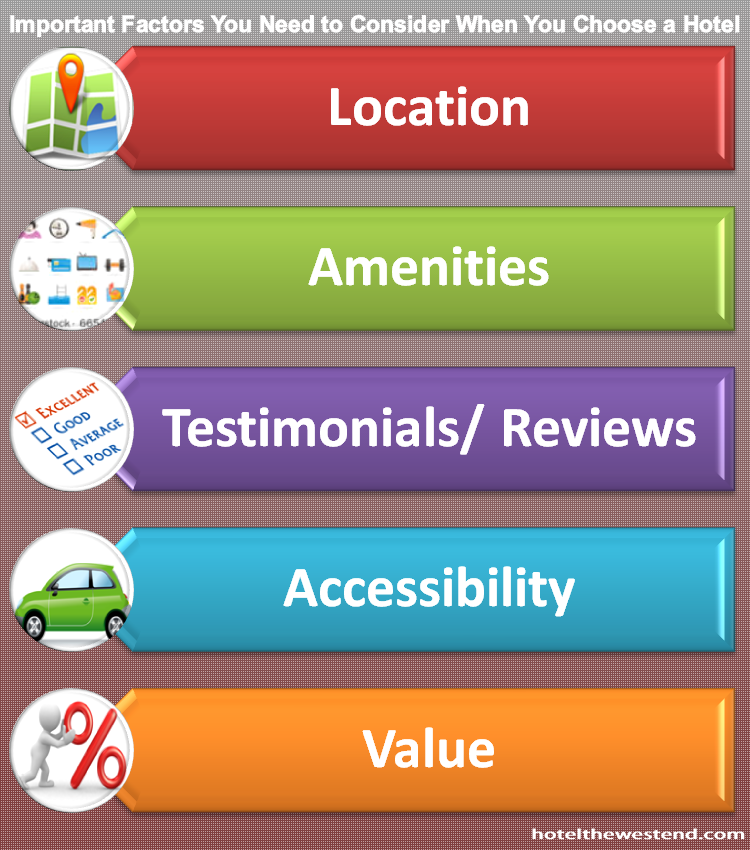
Finding a good hotel is most vital task when you are planning for a picnic or vacation. However, the internet and communication technology has simplified this important problem at some level, but still there are some factors you need to consider while choosing a hotel especially when you are travelling with your family and kids. Let’s discuss the five major factors which are mandatory to consider when you are finalizing the hotel.

Hotel Location:

If you are on a leisure trip, make sure that the hotel is located in the proximity of all the tourist destinations. If your hotel is located centre of the city or town, it makes easy for you to visit the all tourist places in less time. If you are visiting for a business trip, chose a hotel that is nearby to the main business centers or industrial centers of the city. Medical services, shopping malls and airport or railway station also should be near the hotel. It’s just not save time; it will also make your trip more enjoyable.

Hotel Amenities:

The modern hospitality players understand the importance of services and different amenities to their clients unlike the traditional ones. In cut-throat competition, hotels which give exceptional services and amenities are preferred mostly by tourists. For example, if you are staying for a business trip, internet facilities and Wi-Fi is mandatory in your rooms. There are many hotels in India which offer professional guide facilities for the foreigner visitors to prevent any deception or cheating from local wrenched people. Check in the hotel after gathering required information about amenities provided by the hotel.

Testimonials/ Reviews:

In an era of the technology, an end-user has unlimited options to choose because of the competition. Before choosing any particular hotel, you may go through the testimonials received from the other tourists who have already visited that hotel. There is no direct control of the hotel management to the reviews and testimonials so there is a space of 100% honesty and transparency in the reviews published in different travel websites. You can also surf diverse travel articles by different travel bloggers depicting the experiences about the city or the tourist spots.

Accessibility:

This is an extremely important factor when you are on a trip. You should check the smooth transport accessible from the hotel. The Hotel must give shuttle services to the key destinations like shopping malls, tourist places, railway station and airport. Also, there should be public transport or frequent taxi services nearby the hotel. The lack of accessibility of fast transportation is very annoying and it can ruin your travel experience. You can use online maps to decide which hotel to choose while deciding your travelling plans.

 Value:

You can choose a hotel by comparing prices of the different hotels simultaneously. Asking discounts and other lucrative offers is not at all wrong. You are just asking for the best value for your money. You can research about the value added services provided by hotels. Many 3 star hotels in Ahmedabad today come up with new attractive schemes and offers to attract tourists.

Remember that your trip’s pleasure is directly proportional to the hotel you chose to stay. So take great care in choosing the hotel.

Len’s Bio: This article describes necessary factors you should check before deciding the hotel to stay when you go for a vacation. The vicinity of hotel, amenities, value, and accessibility are some of the important factors when you choose a hotel for the comfortable stay.


UNIT 3-LESSON 3

 REQUEST HOUSEKEEPING SERVICES


VOCABULARY


DIALOGUE 

Customer: Hello, I was wondering if you could tell me about some of the other essential hotel services you offer.

Recepcionist : Of course! We offer a range of services to make your stay as comfortable as possible. Firstly, we provide room service, so you can enjoy meals in the comfort of your room at any time.

Customer: That's convenient. What about laundry services? Do you have those?

Recepcionist: Yes, we do have laundry services available. You can drop off your clothes for cleaning and we'll have them washed, ironed, and returned to your room in no time.

Customer: Great, that saves me the trouble of finding a laundromat. What about Wi-Fi? Is it available in the rooms?

Recepcionist: Yes, we offer complimentary Wi-Fi throughout the hotel, including in all guest rooms, so you can stay connected during your stay.

Customer: Wonderful. And do you have a fitness center on-site?

Recepcionist: Absolutely. We have a well-equipped fitness center that's open 24/7, so you can maintain your workout routine at any time that suits you.

Customer: That's exactly what I was hoping for. Lastly, what about transportation services to and from the airport?

Recepcionist: We provide airport shuttle services for our guests. Just let us know your flight details, and we'll arrange a convenient pick-up and drop-off.

Guest: That's very helpful. Thank you for the information. It sounds like you offer all the essential services I need for a comfortable stay.